How to Fix a Gummy Smile: Causes & Treatment Options
September 29, 2026
Quick Summary
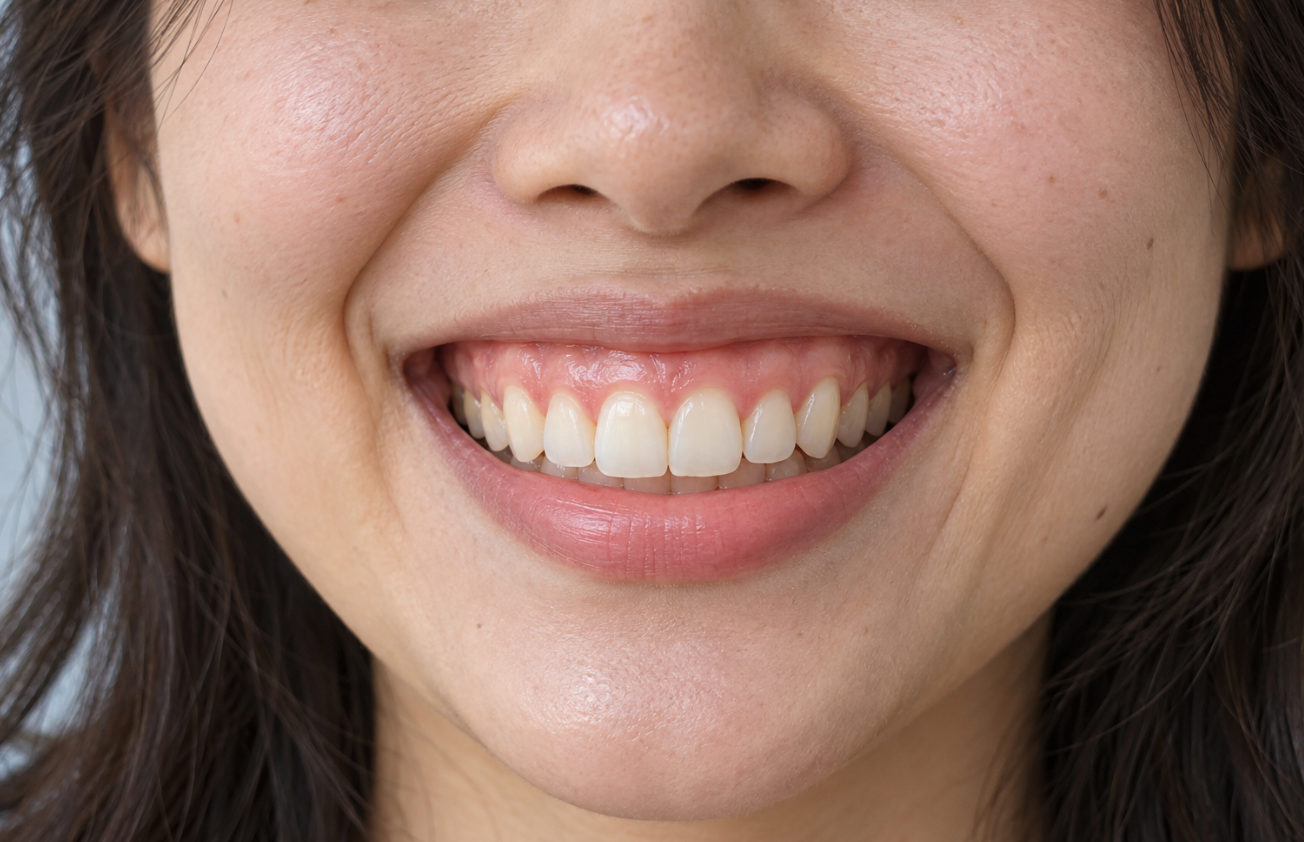
Clinical Definition: Known medically as Excessive Gingival Display, a gummy smile is defined as showing 2 to 4+ millimeters of gum tissue above the upper teeth when smiling.
Is it Harmful?: No, it is primarily a natural aesthetic trait. However, excessive overlapping gum tissue can increase the risk of plaque retention and localized gingivitis if brushing is inadequate.
Primary Causes: It is usually triggered by genetics (gum tissue covering too much of the tooth), highly expressive/active lip muscles that pull up extra high, or an upper jaw that naturally developed further downward.
Non-Surgical Treatment: For mild-to-moderate cases, clear aligners or traditional braces can guide upper teeth upward into the jawbone, which naturally lifts the surrounding gum line along with them.
Surgical Treatment: More pronounced structural cases can be permanently adjusted using laser gum contouring (trimming back the extra tissue) or orthognathic jaw surgery (rebalancing the underlying bone foundation).
A big, joyful smile is one of the absolute best things you can share with the world. Sometimes, those wonderfully vibrant, full-hearted laughs showcase a bit more of the gums- a beautiful trait affectionately known as a gummy smile.
In fact, some of the world's most beloved celebrities are famous for their gummy smiles, including Nicole Kidman, Gwen Stefani, and Miley Cyrus in her earlier public appearances. Their iconic grins are a wonderful reminder that a gummy smile is a completely normal facial feature, not a flaw, and often becomes a beautiful part of a person’s signature look.
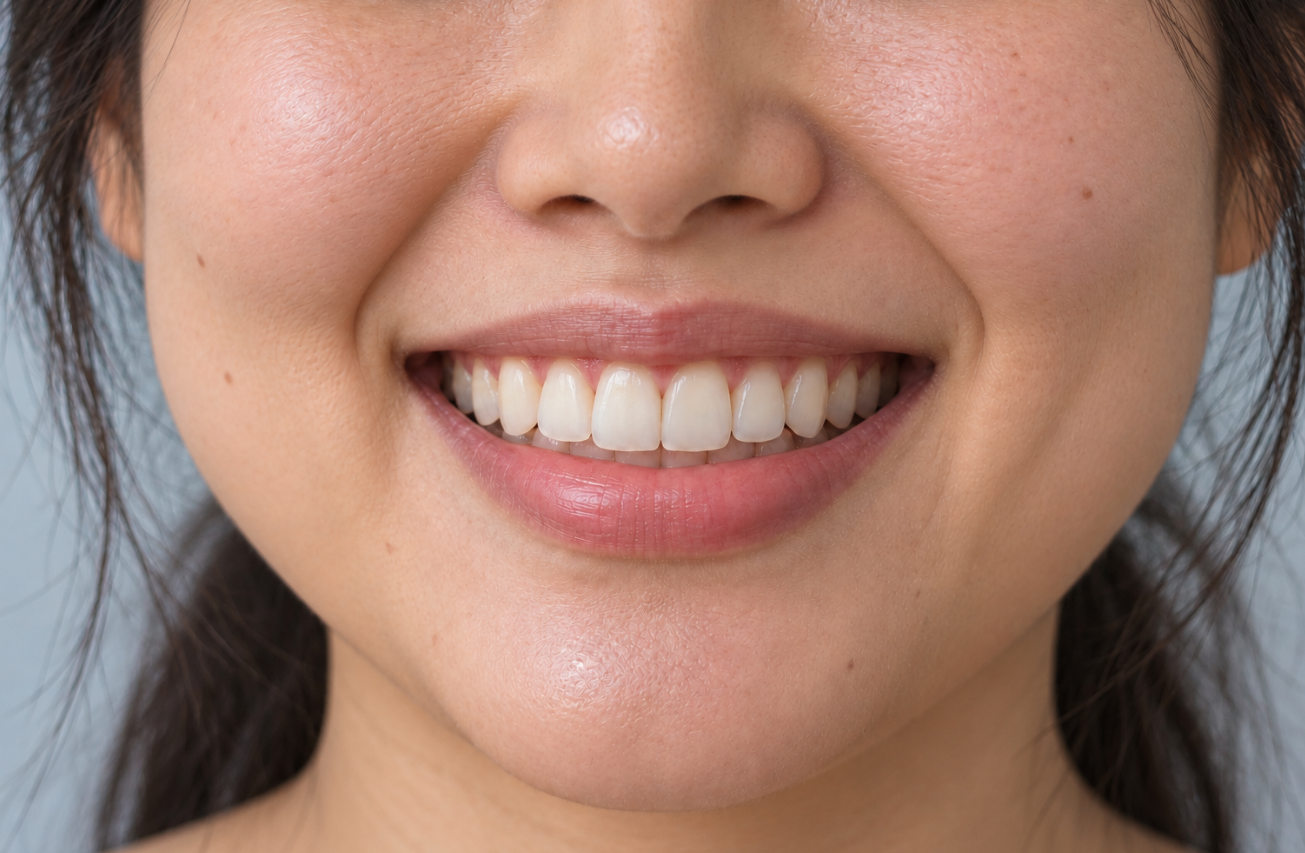
But here is the best part of modern dental care: your smile is entirely your own. While a gummy smile can be a beautiful feature to embrace, it’s also completely valid to be curious about how your smile might look after orthodontic treatment. If you’ve been wondering what your options are, let’s explore the science-backed treatments that may help you achieve a smile that feels more aligned with your preferences.
Gummy Smile Top Treatment Options
If you’ve decided you’d like to explore ways to balance your smile, the modern dental world has some incredible, highly personalized paths for you! Clinical reviews emphasize that a gummy smile is usually multifactorial, meaning it’s shaped by a unique combination of factors.
Because of this, the best journey always starts with a tailored professional diagnosis to find the perfect match for your specific anatomy. Here is a look at the advanced, clinical options available to help you guide your smile exactly where you want it to be:
1. Orthodontic Treatment: Can Braces Fix a Gummy Smile?
The short answer:Yes, absolutely! For mild-to-moderate cases, orthodontic treatment is a fantastic, non-invasive way to harmonize your smile, especially when it's driven by tooth positioning or minor bite variations.
How it works: Traditional braces or clear aligners can perform what orthodontists call intrusion, a precise technique that gently moves the upper front teeth upward into the bone. This naturally and beautifully reduces the amount of gum tissue that shows when you open your mouth to smile.
2. Laser Gum Contouring (Gingivectomy): Giving Your Teeth More Room to Shine
Best suited for: Smiles where the teeth appear a bit small or short simply because the gum tissue is giving them an extra-cozy embrace, covering up the clinical crowns (the visible part of the tooth).
How it works: A minimally invasive gingivectomy or laser gum recontouring gently reshapes and refines the extra tissue to create an even, beautifully balanced gum line. It’s a straightforward solution if your gums simply didn’t naturally recede to their ideal position after your teeth erupted.
3. Orthognathic (Jaw) Surgery: Balancing from the Foundation Up
Best suited for: Deeper structural patterns, particularly vertical maxillary excess, where the upper jaw naturally developed a bit further downward than average.
How it works: When the foundation itself is the coordinator of your smile, orthognathic surgery provides the most comprehensive and transformative results. By adjusting the maxilla upward, specialists can beautifully rebalance the lower third of your face. Because it addresses the skeletal structure, it is safely reserved for broader dentofacial harmony and bite adjustments that orthodontics alone can't quite reach.
Note:
Choosing the right path is all about understanding your unique blueprint. Excess tissue aligns with laser contouring; mild alignment shifts thrive with orthodontics; and a structural foundation is best guided by specialized jaw surgery. Your smile is already a wonderful reflection of you, a friendly consultation with a specialist is simply the next step in exploring how you'd love to share it with the world!
What Is a Gummy Smile? (And Does a "Perfect" Smile Even Exist?)
In clinical terms, dental specialists look at what is called gingival display (the amount of gum tissue that naturally shows when you smile). According to dental references, a gingival display of more than 3–4 mm is typically the benchmark used to define this category. However, dental literature thrives on nuance- some clinical authors adopt a lower threshold, such as 2 mm. It’s simply a reflection of your natural anatomy, and it's what makes your laugh uniquely yours!
The Science Behind the "Perfect" Smile
For those who are curious about exploring different expressions of their smile, dental science offers a fascinating tool called aesthetic smile analysis. Rather than chasing a rigid definition of "perfection," this analysis looks at the beautiful, harmonious relationship among three key features: your teeth, your lips, and your gingiva (gum tissue).
In fact, a classic periodontal review highlights that a visually pleasing smile is all about balance. The study suggests that an ideal equilibrium is reached when the lip line acts as a natural, gentle frame for the upper teeth, allowing each element to complement the others perfectly without any single feature overshadowing the rest.
What Causes a Gummy Smile?
A gummy smile, or excessive gingival display, usually happens because of one or more anatomical factors rather than a single cause. The most common contributors include genetics-related tissue patterns, altered tooth eruption, a hypermobile upper lip, and vertical maxillary excess, where the upper jaw grows downward more than expected.
1. Genetic Factors and Altered Tooth Eruption
Genetics play a major role in determining how your gum tissue embraces your teeth. Sometimes, your teeth are fully developed but choose to stay a little cozier under the gums, making the clinical crowns (the visible part of the tooth) appear shorter.
In clinical screenings, this natural tissue pattern is known as altered passive eruption, and it’s identified as one of the primary reasons behind a gummy smile. In much rarer hereditary cases, such as hereditary gingival fibromatosis, the DNA safely triggers a progressive overgrowth of the tissue. It’s simply your genetics creating its own unique layout!
2. Lip Muscles and Movement (Hypermobile Lip)
Sometimes, a gummy smile isn't about your teeth or gums at all- it’s just a sign of how enthusiastically you laugh! A hypermobile upper lip means the muscles responsible for your facial expressions are incredibly active, lifting the lip a bit higher than average when you find something genuinely hilarious.
This is a well-documented trait in dental literature. In fact, a study published in the Journal of Periodontology found that a hypermobile upper lip was actually the most prevalent factor among individuals exploring gummy smile treatments. Even if your tooth size and gum levels are completely standard, a beautifully expressive lip line will naturally share more of your smile with the world.
3. Jaw Development and Misalignment
Finally, it can all come down to your underlying skeletal foundation. A growth pattern known as vertical maxillary excess occurs when the upper jaw naturally develops a bit further downward than expected.
This structural pattern often gives the lower face a longer, elegant appearance and naturally brings more of the gingiva into view when you smile. Because this is part of a broader dentofacial growth pattern, it often coexists with natural bite variations. If someone ever chooses to explore adjusting this look, it is approached as a matter of overall structural harmony, which can be beautifully guided by orthodontic or specialized dental evaluation.
Is a Gummy Smile Bad for Your Health?
The quick and comforting answer is usually no. According to clinical repositories like StatPearls, an abundance of visible gum tissue is primarily a unique aesthetic trait rather than a direct medical hazard. On its own, your vibrant smile is completely harmless!
However, because exceptional oral care is all about looking at the big picture, dental professionals often look at the underlying cause of your smile anatomy. While the smile itself isn't dangerous, certain structural factors behind it can occasionally intersect with your daily oral wellness.
According to comprehensive clinical reviews from the National Institutes of Health (NIH/NCBI), here is how your unique anatomy can gently connect to your health:
Plaque Control & Tissue Care: If your smile pattern is shaped by gingival overgrowth or altered passive eruption (where tissue comfortably hugs a larger portion of the tooth), it can sometimes create cozy, hard-to-reach hiding spots for food. If not given a little extra love during your routine, this plaque retention can lead to localized inflammation, redness, and an increased risk of gum disease.
The Mouth-Breathing Connection: In some individuals, a gummy smile coexists with certain facial structures or lip postures that encourage mouth breathing. Clinical studies show that breathing through the mouth can dry out oral tissues. Without enough saliva, which is nature’s natural cleanser to wash away bacteria, this dryness can occasionally worsen gum irritation and affect overall plaque control.
Structural & Bite Harmony: When a smile is guided by an underlying skeletal pattern like vertical maxillary excess (where the upper jaw naturally develops further downward), it simply reflects a broader dentofacial growth pattern. In these instances, a warm evaluation by an orthodontist ensures that your bite and alignment are functioning as comfortably and optimally as possible.
Editor’s note:
Think of a gummy smile as a beautiful, unique feature that simply invites you to be a little more mindful of your brushing and flossing routine! If your gums look healthy, pink, and firm, your smile is purely a gorgeous expression of who you are. However, if you ever notice your gums feeling tender, swollen, or if your bite feels slightly off, scheduling a friendly chat with your dentist is a wonderful way to keep your smile both radiant and healthy.
Gummy Smile Treatment in Singapore: How Clear Aligners Correct a Gummy Smile
You don’t always need complex surgical procedures to achieve the smile harmony you’re looking for. Zenyum Clear™ Aligners are a fantastic, non-invasive option if your gummy smile is driven by tooth positioning or mild bite variations.
When you wear your 3D-printed Zenyum aligners for the recommended 20–22 hours a day, they do more than just straighten your teeth. For eligible mild-to-moderate cases, the aligners exert precise, gentle pressure to perform what dental experts call orthodontic intrusion. This means your upper front teeth are gently guided upward into the jawbone. As your teeth move into their ideal alignment, the surrounding gum tissue naturally follows, beautifully reducing the amount of gum show when you smile!
The best part? It’s completely discreet, entirely customized by Singapore-licensed dentists, and definitely won’t cramp your style while you go about your busy day.
Ready to Find Your Perfect Balance?
Remember, every smile journey is unique, and clear aligners thrive best when the root cause is tooth-related rather than structural jaw development. That’s why the best first step is a completely free smile check!
Editor’s note:
✨ Take the First Step to Your Dream Smile! Your unique smile is already a wonderful part of who you are. If you’re ready to see how Zenyum can help you unlock your most confident, balanced grin, why wait? Let our network of dental experts help you design a smile that you’ll love showing off to the world.
Can I use my CPF Medisave to pay for gummy smile treatments in Singapore?
The Quick Answer: Usually no, but there is an important exception. Because most gummy smile treatments (like clear aligners, Botox, and laser contouring) are classified as elective cosmetic enhancements, they cannot be claimed under Medisave.
However, if your gummy smile is tied to severe vertical maxillary excess and you require orthognathic (jaw) surgery to correct functional bite issues or jaw misalignment, a portion of the surgical and hospitalization fees may be Medisave-claimable. Always check with your surgical provider for a personalized breakdown!
How long do the results last? Will my gummy smile come back?
The Quick Answer: It depends on whether you choose a temporary lifestyle tweak or a permanent structural change.
Temporary: Botox is a wonderful, reversible test-drive for your smile, but it naturally wears off after 3 to 6 months as your lip muscles regain their usual enthusiasm.
Permanent: Laser gum contouring, lip repositioning surgery, and jaw surgery alter the underlying tissue and bone structure, meaning their beautiful results are built to last a lifetime.
The Lifetime Maintenance: If you use clear aligners or traditional braces, your results are beautifully permanent as long as you wear your retainers! Remember, your teeth have a natural muscle memory, so wearing your retainers keeps them perfectly locked in their new, balanced positions.
Am I too old to use clear aligners to balance my gummy smile?
The Quick Answer: Absolutely not! Your bone biology doesn't care about the date on your birth certificate. As long as your teeth and gums are healthy, adults of any age can successfully enjoy orthodontic treatment. Whether you are 22 or 52, your teeth will still respond beautifully to the precise, gentle pressure of Zenyum aligners. In fact, taking charge of your smile later in life is an incredibly empowering form of self-care!